StadiumDepot
StadiumDepot
Sign In
HomeBrowseAddToolsCommunity
AboutTermsPrivacy

© 2026 StadiumDepot

Helix®, HX®, Line 6®, POD®, Variax®, Powercab®, Stadium™, and related marks are trademarks of Yamaha Guitar Group, Inc. StadiumDepot is an independent platform and is not affiliated with Line 6 or Yamaha Guitar Group, Inc.

Community

Connect with members, discover picks, learn tips & tricks, and find answers

Newest Members

View All
GaryFitzwater

GaryFitzwater

BenjaminJohr

BenjaminJohr

JustinKarp

JustinKarp

ChrisWood

ChrisWood

ChiefGrump

ChiefGrump

SeanCurtin

SeanCurtin

Community Picks

Top picks from the community

View all
Gear
SD Pick
Top Pick

Best Isolation Headphones Under $200

Extreme Isolation EX-29 Plus
These are what I use live and at home. I’m usually standing right next to a PA speaker, and these block a ton of that volume and help protect my hearing. They’re small, simple, and easy to throw in a gig bag without taking up space. In the box: 96″ cable extension with 3.5 mm plug and 6.3 mm screw-on adapter (no carry bag)
1
+2 more
Gear
SD Pick
Top Pick

Strap Locks

Rok Lok PRO
Quick-change strap lock system that securely attaches the strap while allowing fast removal. Suited for players who swap straps often and want secure retention without permanent modifications.
1
+1 more
Gear

Stadium XL – Backpack / Case / Bag $100–$200

Monoprice Weatherproof Hard Case
Weather-sealed hard case with customizable pick-and-pluck foam. Durable shell suited for transport and storage when maximum protection is required. Not device-specific, but fits the Stadium XL with room below for cables and misc.
0

Tips & Tricks

Helpful tips and tricks from the community

View all
Tips & Tricks
Stadium > Showcase

Play-Along Practice With Stadium Showcase

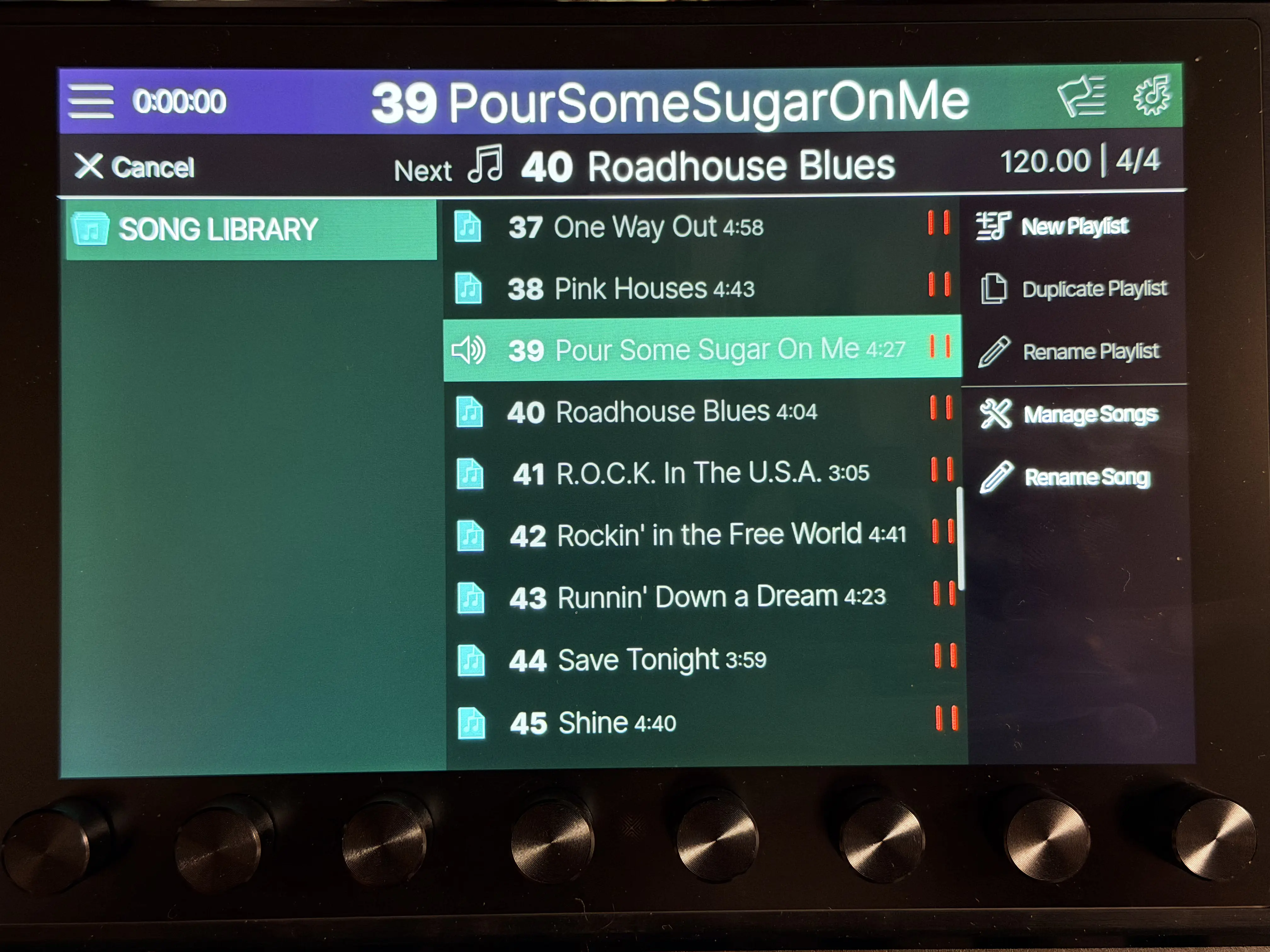
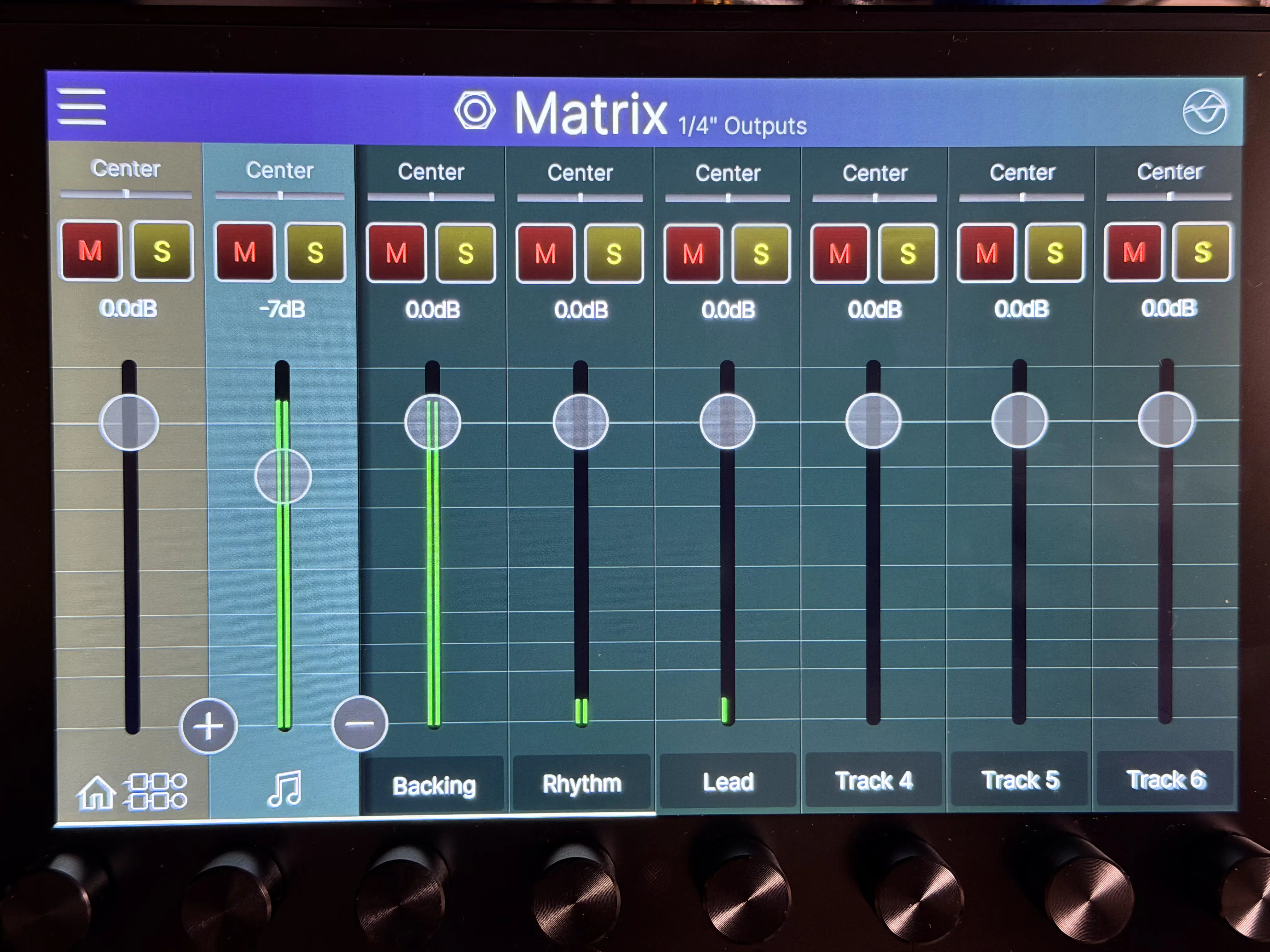
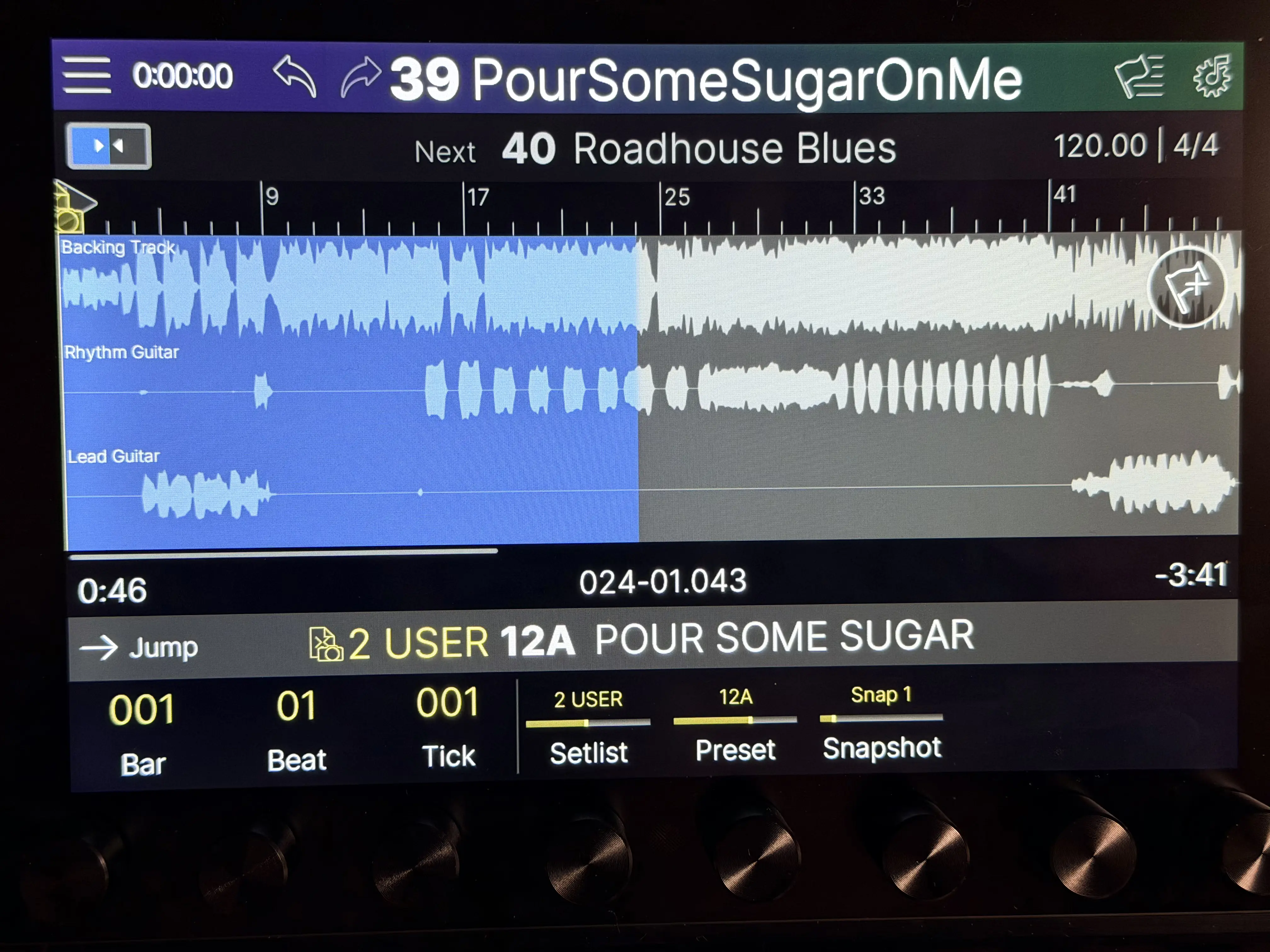
Stadium Showcase makes it easy to practice and dial in presets by letting you play full songs from your pedal, mute all the guitars and play the whole song yourself, mute just the lead or rhythm guitar to work on specific parts, and automatically switch presets and snapshots so you can stay focused on playing and tone.

Here’s how I do it, step by step.


Step 1: Get the Song Audio

First thing you need is the song as an audio file. Pretty much anything works as long as it’s a real audio file you can upload later.

Stadium and Moises can work with:

MP3, WAV, FLAC, M4A, MP4, MOV, WMA

Ways People Usually Get the Audio

  • You already have it

    If you’ve bought the song or already have it in your library, you’re good.

  • Rip it from a CD or other physical media

    Old-school, but still one of the cleanest ways to get high-quality audio.

  • Rip it from YouTube or streaming services

    A lot of people use third-party ripping sites or software to grab audio from YouTube or streaming platforms.


    Common methods:

    • YouTube ripping websites or desktop apps

    • Streaming service rippers

    • Video-to-audio converters

    • System audio recorders that capture what’s playing

For best results later, try to get the highest quality version you can. WAV or FLAC is ideal, but a good MP3 will still work.


Step 2: Create Stems With Moises.ai

Once you’ve got the song, the next move is breaking it into stems (ex. extracting the lead guitar track form the song) so you can control what you hear while practicing.

I use Moises.ai for this—it’s great, and like StadiumDepot (wink wink, please support this site), it’s a small monthly or yearly subscription that’s absolutely worth it if you like supporting good tools built by real developers.

Create the Stems

  1. Open the Moises desktop app

    Use the desktop app, not the web version. The desktop app lets you transpose the song (ex. recording is in Eb but your band plays it in E) and export the corrected audio.

  2. Start track separation

    Click Track Separation and drag in your audio file.

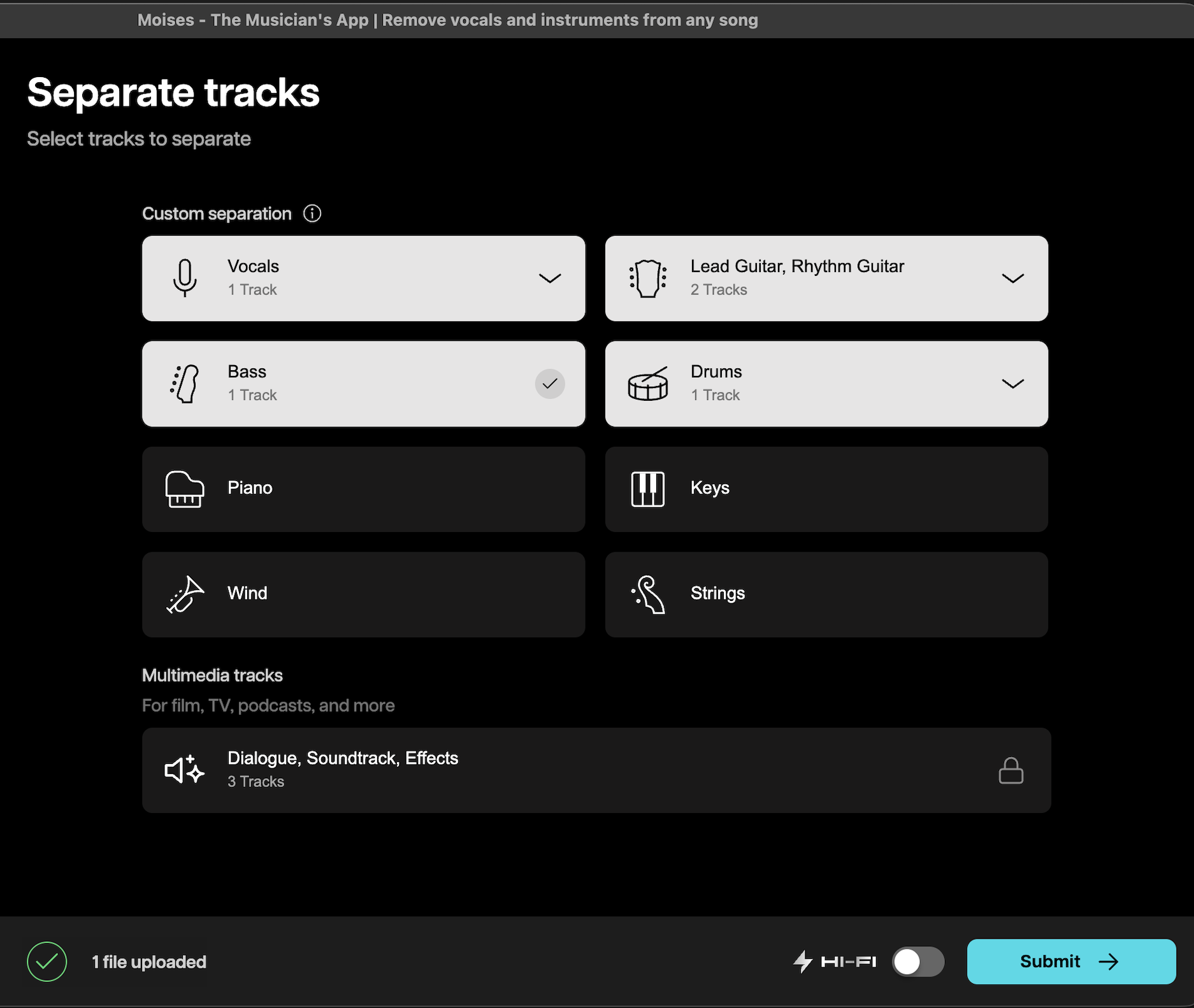
  3. Pick your stem setup

    I usually choose:

    • 1 vocal track

    • 1 bass track

    • 1 drum track

    • 1 rhythm guitar track

    • 1 lead guitar track

    This separates into the 3 key tracks needed (backing track aka no guitars, rhythm guitar, and lead guitar).

  4. Submit it

    Hit submit and let Moises do its thing.


Export the Mixes

Now comes the important part—exporting the versions you’ll actually use in Stadium.

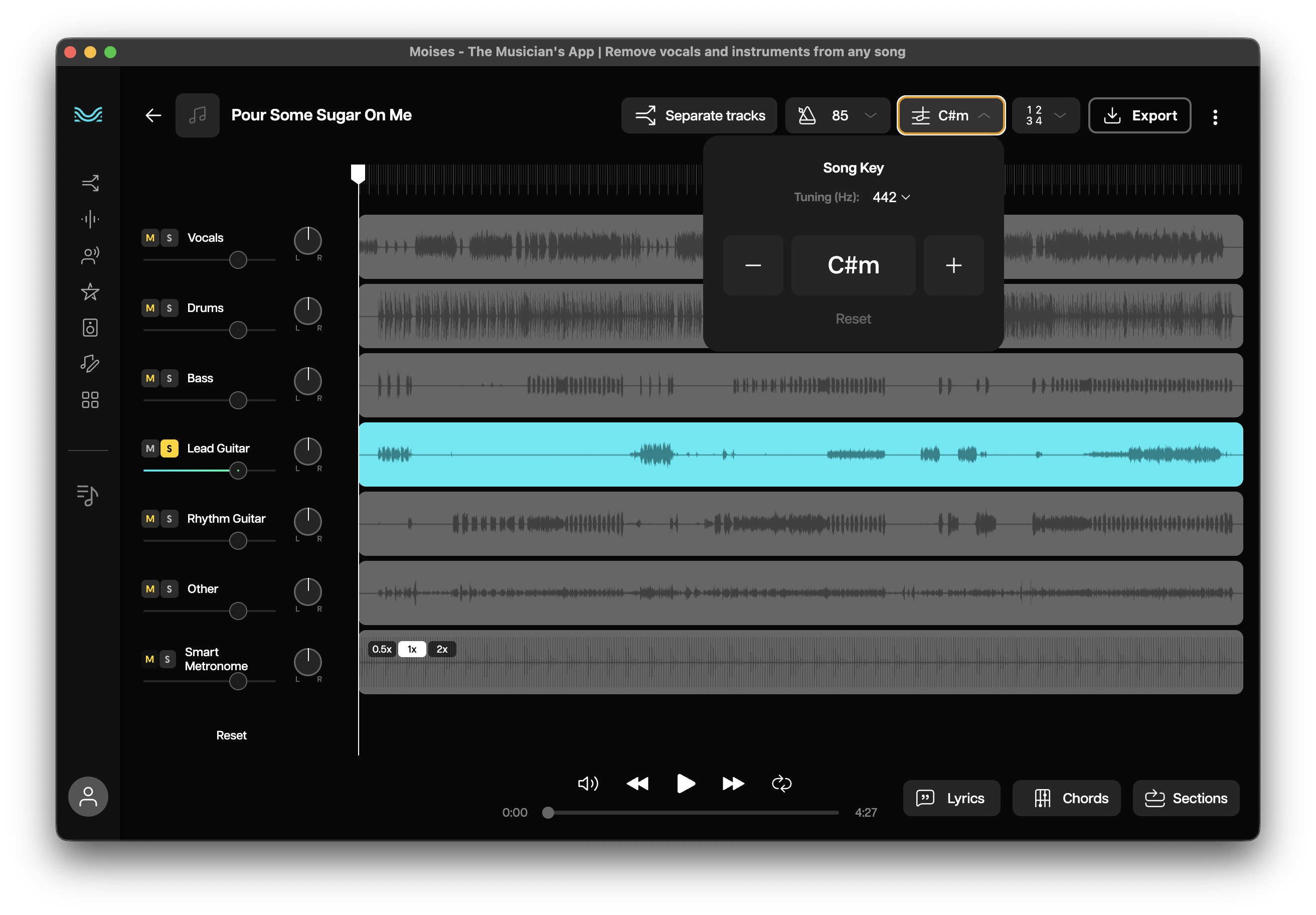
  1. Set the key and tuning

    If the recording is not in your desire key and or tuning, fix that now.

  2. Export the backing track

    • Mute both rhythm and lead guitar

    • Export the mix as WAV

  3. Export the rhythm guitar track

    • Solo the rhythm guitar (mute everything else)

    • Export the mix as WAV

  4. Export the lead guitar track

    • Solo the lead guitar

    • Export the mix as WAV

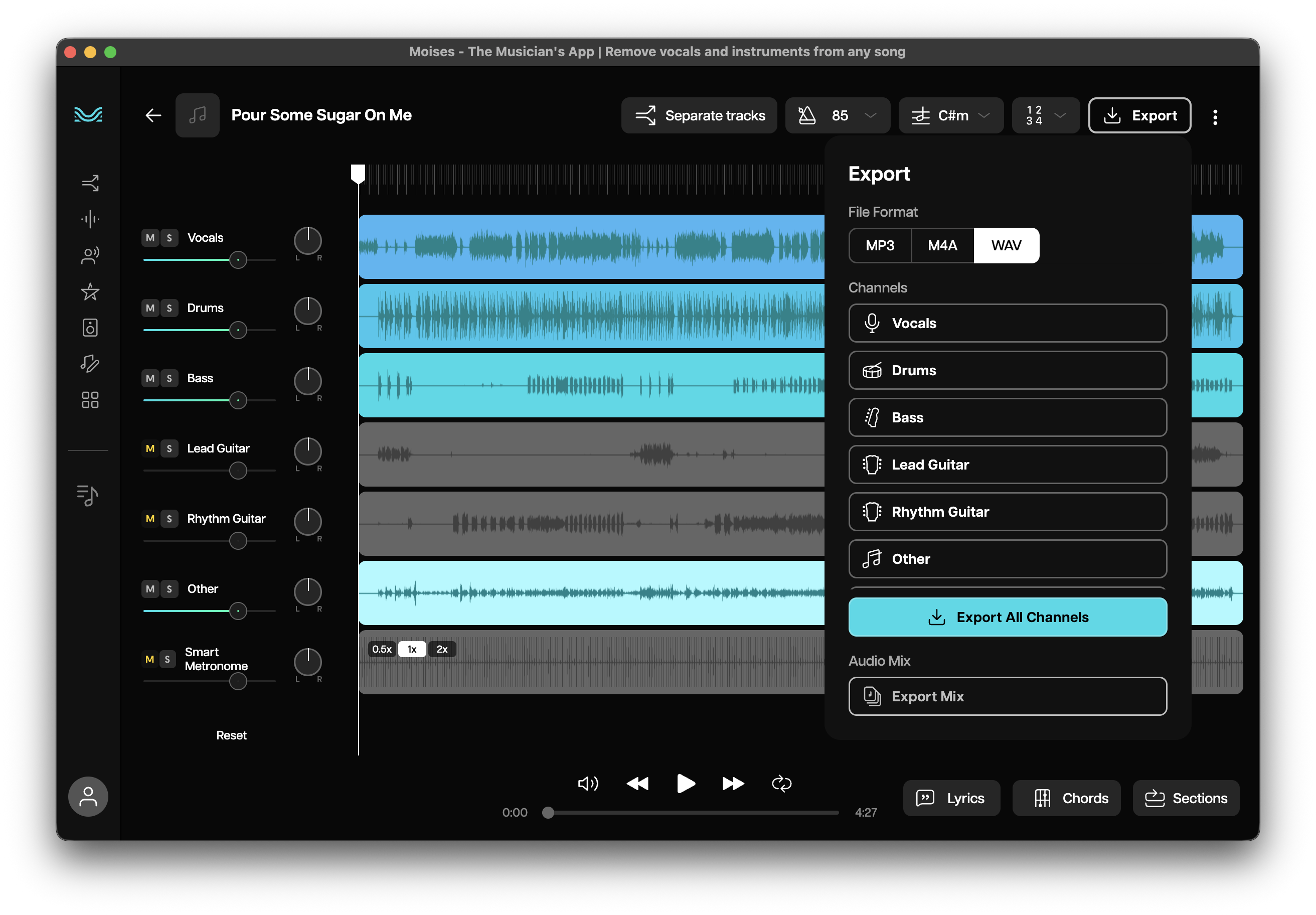
Important:

Use Export Mix, not individual channels. That way the key change, tuning, and volume balances stay intact across all files.


Step 3: Create the Song in Stadium Showcase

Now you’re ready to get everything into Stadium.

  1. Open the Helix Stadium app

    Launch the app and connect to your Stadium pedal.

  2. Open Showcase

    Click the Song icon in the top-center toolbar.

  3. Name the song

    Keep it simple and recognizable—you’ll be scrolling through this on the pedal later.

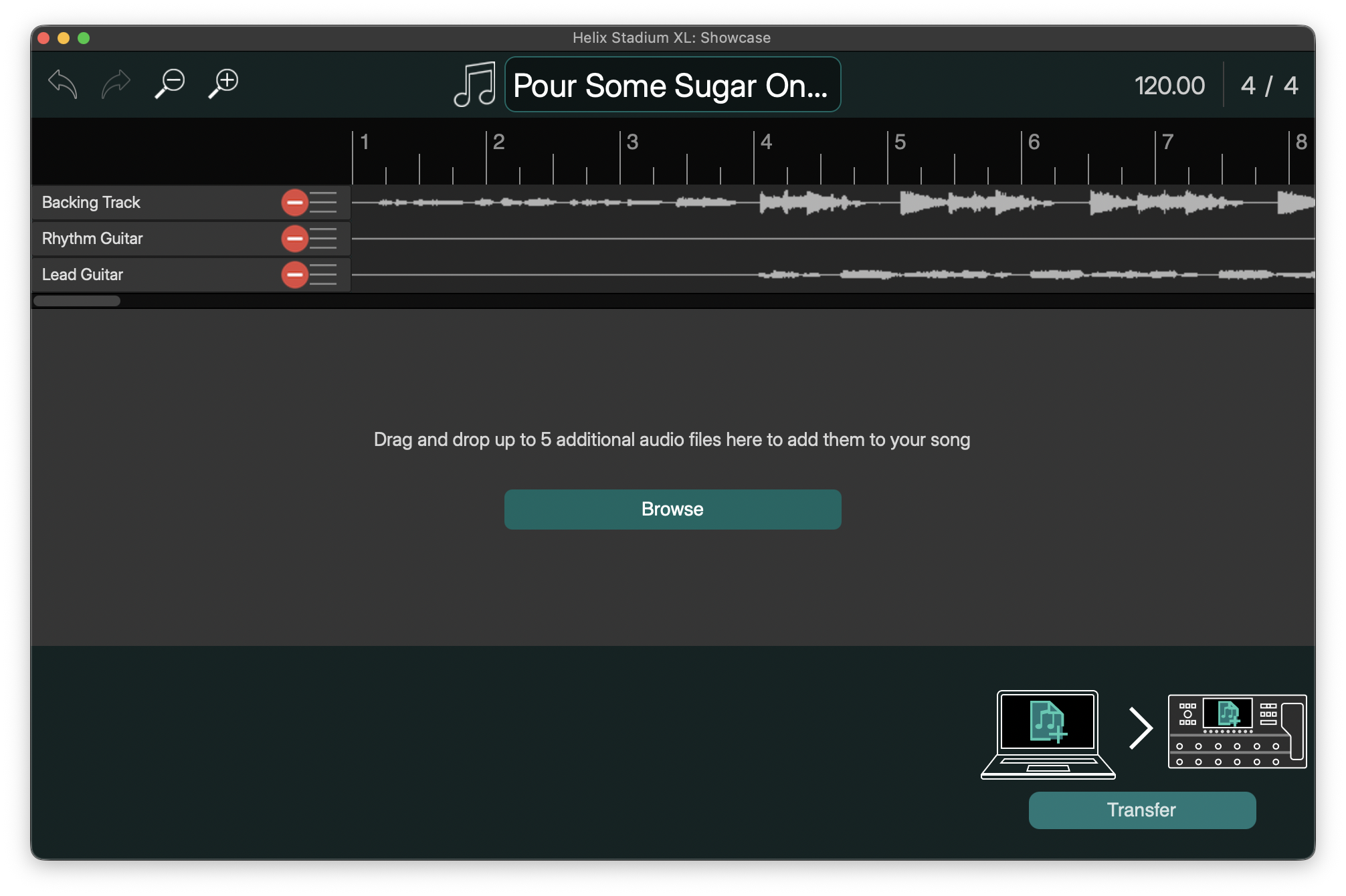
  4. Drag in your stems

    Drop the WAV files into the Showcase window.

  5. Sort the tracks

    I like to keep them in this order:

    • Backing track

    • Rhythm guitar

    • Lead guitar


  6. Click Transfer

    This sends the song and all tracks to your Stadium.

Once that’s done, the computer is basically out of the picture.


Step 4: Use Showcase for Real Practice

I hit the Song button on Stadium, pick the song, press play—and that’s it.

From there:

  • I mute the guitar tracks and play along

  • I mute backing and rhythm to focus on lead parts

  • I solo rhythm and practice tight timing

  • I blend tracks to match rehearsal or live conditions


Step 5: Match Your Preset to the Recording

This setup is also how I make sure my presets actually sound right.

I’ll:

  • Mute my guitar tracks and listen to the recording

  • Bring my guitar back in and compare in real time

  • Adjust EQ, gain, compression, or effects until it sits right


Why This Works So Well

  • Practice to the original recording

  • Practice in the correct key and tuning

  • Mute rhythm or lead guitars to play with the band

  • Isolate the rhythm and or lead guitar parts

  • Load the right preset and snapshot automatically

0
Tips & Tricks
Stadium > Presets

Volume leveling across presets & snapshots

Here's how I level volumes across presets and snapshots, including appropriate volumes for rhythm and leads.

1. Install this free loudness meter: https://youlean.co/youlean-loudness-meter/

I use “loudness” instead of decibels since that’s how we/the audience perceive volume (and it’s a recording studio standard).

2. Get an external looper pedal (like the Acoustic Loop1 Looper Pedal) and connect it to guitar in on your helix/stadium.

Note: We need to use an external pedal to get clean droning of notes so we can be hands free to adjust volumes. We cannot use the looper in the helix since 1) that would require adding the looper to every preset and 2) it would include modeling/effects

3) record the following in your external looper: a 5-10 second loop droning on the open A string followed by a 5-10 second loop droning on the open G string. Pick as you normally would (the importance is consistent strength of the picking) - I chose to pick like the opening lick to the dick dale song misirlou.

We need A and G so we can measure the loudness for low and high notes (high notes tend to be louder).

4) open hx edit and the loudness meter.

5) switch to your desired preset and snapshot.

6) open the level of your preset’s final output and set it to snapshot mode

7) play the loop on your external looper and watch the short term and integrated levels.


Short term = the immediate levels.
Integrated = the average of levels over the last 5+ seconds


Tip: you can press the red X under the meter readings to reset the level readings


8) for rhythm snapshots, set the final snapshot output level to negative 22 LUFS.

For lead snapshots (solos, licks, etc), set the final snapshot output level to negative 18 LUFS (which essentially makes leads 4db louder than rhythm).

If you can’t get the level precisely at my recommendations, it’s fine to be .5 higher or lower on the integrated average

————————


FWIW - I determined the appropriate rhythm level by measuring the loudness of several factory helix/stadium presets of all different styles. I then set leads to 4db higher (seems to be my and Reddit’s consensus on lead volume) and remeasured.


Tip for co-guitarists: use the same helix/stadium setlists, set your helix physical master volume to the same, set the boards volumes to the same, set your guitar volume to maximum.


Final tip: I always add a 0-4db gain control to the expression pedal of every preset. This allows me to adjust on the fly if needed.
0
Tips & Tricks
Stadium > Buttons & Shortcuts

Hold AMP Button → Cycle Matching Cabs

While you tap AMP to select the amp, you can also press and hold AMP to auto-select the cab. Press and hold AMP again to cycle to the next cab.

0

FAQs

Frequently asked questions and answers

View all
Do I need an account to use StadiumDepot?
Browsing StadiumDepot does not require an account. Creating a free account is required to vote, download content, and interact with community features. Accounts are secure and use trusted sign-in providers such as Google or GitHub. Once you create your free account, you can become a sponsor to sell content and access premium benefits.
Accounts & Security
How do I create a preset on StadiumDepot?
You can create presets by uploading an existing preset file or by using the built-in preset creator tool, which guides you through platform, genre, and instrument choices.
Creating & Selling
What does it mean to pair presets?
Pairing presets links the same tone across different platforms (such as Helix and Stadium). For example, if you have a Helix version and a Stadium version of the same preset, pairing them tells StadiumDepot they represent the same sound, just formatted for different devices. Each preset’s details page will include a link to the other paired version, making it easy for users to find the correct preset for their platform. To pair presets, go to your Dashboard, open My Content, select a preset, and choose Pair Preset to link it with the corresponding version from another platform.
Creating & Selling